
Reflections
What Is Chartreuse? The Secret French Liqueur Made by Monks

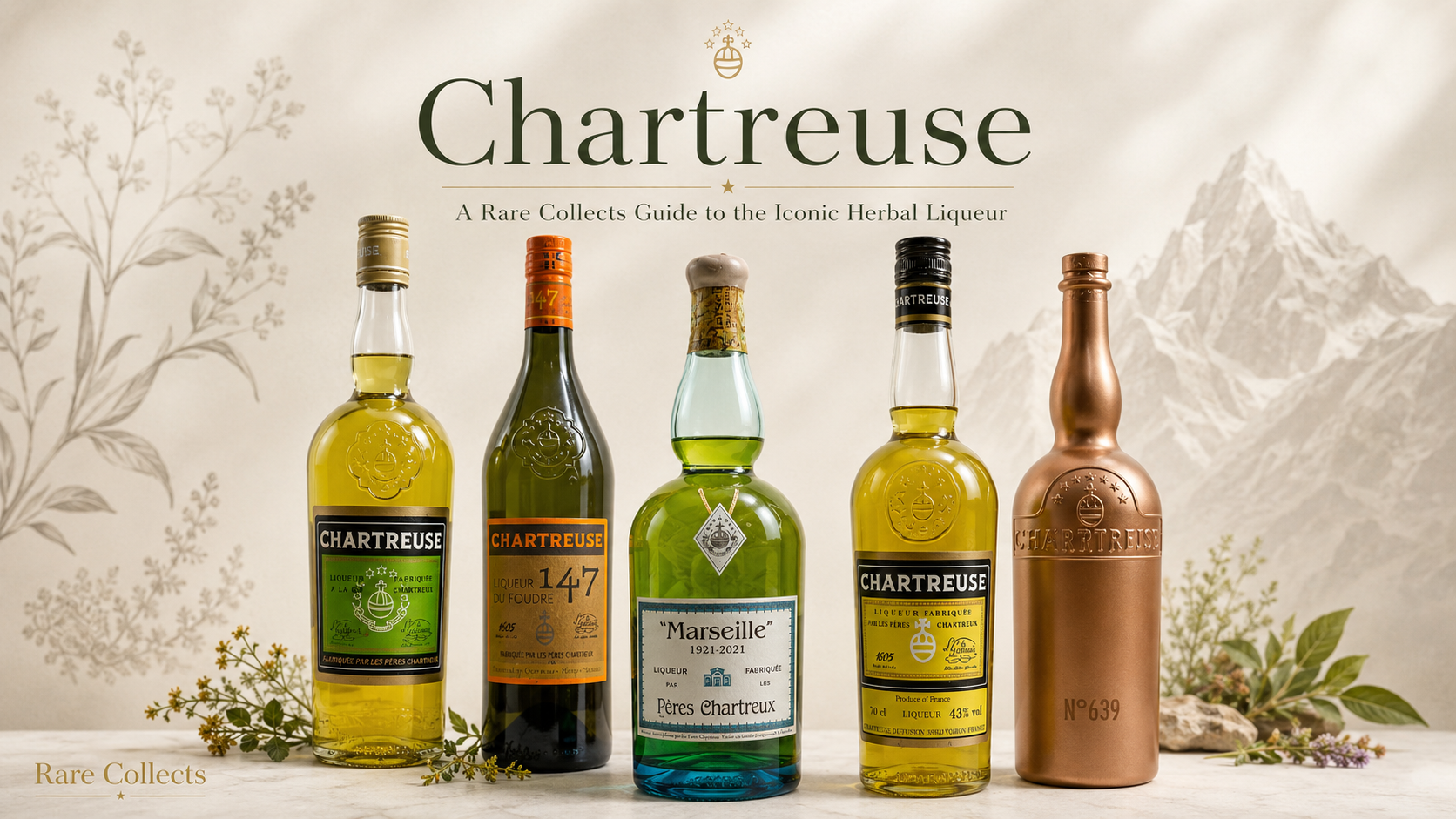
Chartreuse is one of the few spirits where the story sounds almost too good to be true: a French herbal liqueur made by Carthusian monks from a secret formula involving 130 botanicals.
And it is still being made.
The familiar green and yellow bottles are only the beginning. Chartreuse has more than two centuries of liqueur history behind it, along with vintage bottlings, discontinued production eras, extended-aged V.E.P. releases and extremely limited cuvées that have become serious collector bottles.
So what exactly is Chartreuse, what does it taste like, and why can certain bottles be so difficult to find?
What Is Chartreuse?
Chartreuse is a French herbal liqueur produced by the Carthusian Fathers using alcohol, sugar, water and a secret combination of 130 plants, roots, bark, spices and flowers. The producer says the exact formula remains secret, with only two people knowing it.
Unlike gin, Chartreuse is not simply a botanical-flavored distilled spirit. It is a liqueur, meaning sweetness is part of its structure, and its production involves distillation, maceration and extended aging in oak vats.
The two best-known expressions are Green Chartreuse and Yellow Chartreuse.
They share the same extraordinary botanical foundation, but they do not taste the same.
Who Makes Chartreuse?
Chartreuse is made by the Carthusian Order, a Catholic monastic order whose origins in the Chartreuse Mountains date to 1084. The liqueur’s history begins centuries later, when a mysterious manuscript containing instructions for an herbal elixir reached the Carthusians in 1605.
The monks spent generations refining it.
By 1764, the process for the Élixir Végétal de la Grande Chartreuse had been formally recorded. Green and Yellow Chartreuse followed in 1840, establishing the two expressions most drinkers recognize today.
That history matters because Chartreuse has never operated like an ordinary spirits brand.
Its identity is tied directly to the monks, their monastery and the Chartreuse Mountains themselves.
What Is Chartreuse Made From?
The short answer is 130 botanicals.
The exact recipe is not public.
Chartreuse identifies the ingredients broadly as alcohol, sugar, water and plant substances including:
- Plants
- Flowers
- Bark
- Roots
- Spices
The botanicals are processed through several stages, including grinding, distillation and maceration. The maceration process also contributes to the natural colors of Green and Yellow Chartreuse.
That complexity is one reason Chartreuse is difficult to imitate.
You can recognize mint, citrus, pepper, herbs, anise, floral notes and spices in the glass, but no single ingredient explains the flavor.
What Does Chartreuse Taste Like?
There is no perfect comparison.
Chartreuse can be herbal, sweet, minty, spicy, floral, citrusy, bitter and intensely aromatic at the same time.
Green Chartreuse is the more forceful of the two classic expressions. The producer describes herbaceous and peppery aromas followed by mint, pine sap, citrus and a bittersweet tea-like finish.
Yellow Chartreuse is softer. Expect more sweetness, warm spice, citrus, anise, turmeric-like notes and a floral finish.
That difference leads to one of the most common Chartreuse questions.
Green Chartreuse vs. Yellow Chartreuse: What’s the Difference?
They are related, but they are not interchangeable.
Green Chartreuse
Green Chartreuse is the stronger and more intense expression.
The current traditional Green Chartreuse is bottled at 55% ABV. It has a powerful herbal profile with mint, pepper, pine, citrus and bitter botanical notes.
It works extremely well as a digestif, but it is equally famous behind the bar.
One of the classic examples is the Last Word, which combines Green Chartreuse with gin, maraschino and lime.
Yellow Chartreuse
Yellow Chartreuse is softer, sweeter and lower in alcohol.
The current traditional Yellow Chartreuse is bottled at 43% ABV. Its profile leans toward sweet herbs, spice, citrus, anise and floral notes.
For someone tasting Chartreuse for the first time, Yellow can be more approachable.
Green, however, delivers the intensity that made Chartreuse famous.
Why Is Chartreuse Green?
The color is not simply a branding decision.
According to Chartreuse, Green Chartreuse gets its natural color through maceration of the botanical ingredients used during production.
The same principle applies to Yellow Chartreuse, although its recipe and production differ significantly from Green.
The color “chartreuse” eventually became so recognizable that the liqueur gave its name to the yellow-green color we use today.
How Strong Is Chartreuse?
Chartreuse is stronger than many people expect from a liqueur.
Traditional Green Chartreuse is 55% alcohol by volume, while traditional Yellow Chartreuse is currently 43% ABV.
That matters when drinking it neat.
A small chilled pour can carry enormous aromatic intensity, especially with Green Chartreuse.
How Should You Drink Chartreuse?
There is no single correct way.
For traditional Green or Yellow Chartreuse, good starting points include:
- Neat
- Chilled
- Over ice
- As an after-dinner digestif
- In classic cocktails
- As a modifier in modern cocktails
Chartreuse itself recommends serving the traditional expressions chilled around 12–13°C or over ice when enjoyed as digestifs.
For a collectible vintage bottle, the approach changes.
You are no longer simply tasting a liqueur. You may be opening something that represents a discontinued distillery, a specific bottling period or decades of bottle evolution.
Does Chartreuse Age?
Yes, and this is where Chartreuse becomes especially interesting.
The producer states that traditional Green and Yellow Chartreuse spend significant time aging in large oak vats before bottling and continue to evolve and develop complexity in the bottle afterward.
That helps explain the fascination with older Chartreuse.
A modern bottle and a bottle produced decades ago are not necessarily expected to show the same aromatic profile.
Age alone, however, does not automatically make a bottle valuable. Condition, fill level, storage, bottling period, rarity and provenance matter.
What Is Chartreuse V.E.P.?
V.E.P. stands for Vieillissement Exceptionnellement Prolongé, or exceptionally prolonged aging.
Chartreuse created V.E.P. in 1963. Selected Green or Yellow Chartreuse receives additional aging for years in smaller oak vessels known as demi-muids before release. Production is limited.
V.E.P. is one of the clearest steps from everyday Chartreuse into the collector category.
Rare Collects carries Chartreuse V.E.P. Verte 1L, alongside older vintage V.E.P. releases for collectors looking beyond the current bottling.
Why Is Old Chartreuse Collectible?
Chartreuse has been produced through several historically distinct periods.
Wars, political expulsions, distillery moves and even a landslide have changed where Chartreuse was produced over the years. Production moved to Tarragona, Spain after the monks were expelled from France in the early twentieth century, while a 1935 landslide destroyed the Fourvoirie distillery and led to production resuming in Voiron.
Those changes created identifiable eras of Chartreuse.
Collectors therefore pay attention to terms such as:
- Tarragona
- Voiron
- V.E.P.
- Santa Tecla
- Foudre 147
- Une Chartreuse
- Limited commemorative cuvées
- Large-format bottles
A bottle’s place and period of production can matter almost as much as the name on the front label.
For example, Rare Collects currently carries historic bottles such as 1964 Chartreuse Green Voiron and 1941 Chartreuse Green Voiron.
These are fundamentally different collector objects from a current bottle of Green Chartreuse.
What Is the Rarest Chartreuse?
There is no permanent answer because rarity depends on the exact edition, bottling year, format and number of surviving bottles.
But some releases sit at the extreme end of Chartreuse collecting.
One of the most important is Une Chartreuse.
The first Une Chartreuse release appeared in 2015 and was limited to just 240 examples. Chartreuse says the cuvée was subsequently renewed using a Solera, or perpetual-reserve, principle.
Rare Collects currently has examples including 2017 Une Chartreuse Green and the 2019 Une Chartreuse Yellow & Green Duo.
Older Tarragona and Voiron bottles can also be exceptionally scarce, particularly when condition and provenance are strong.
Why Is Chartreuse So Expensive?
First, an important distinction: not every bottle of Chartreuse is expensive.
Traditional Green and Yellow Chartreuse are drinking bottles. Collector releases operate in a different market.
Rare bottles become valuable because several factors can overlap:
- Limited production
- Historic bottling period
- Discontinued production location
- Age
- Bottle size
- Special edition or cuvée
- Condition
- Fill level
- Original packaging
- Provenance
- Number of surviving bottles
A limited modern cuvée can be scarce because very few were made.
A 70- or 80-year-old Voiron bottle can be scarce because relatively few well-preserved examples remain.
Those are two completely different forms of rarity.
Is Chartreuse Still Made by Monks?
Yes.
Traditional Green Chartreuse is still produced by the Chartreux Fathers, with production centered today at the Aiguenoire distillery in the Chartreuse Mountains of France. The distillery opened in 2018.
The monastery and the production facility are separate, which allows the Carthusian community to maintain the quiet monastic life that defines the order.
That separation between monastic life and commercial production is an important part of understanding Chartreuse.
It is not a conventional spirits company with monks attached to the marketing.
The monks are the reason Chartreuse exists.
Is Chartreuse Worth Collecting?
For the right collector, absolutely.
Chartreuse offers something relatively uncommon in spirits: you can build a collection around different production eras rather than simply age statements.
A serious collection might include:
- Current Green and Yellow Chartreuse
- V.E.P.
- Vintage V.E.P.
- Voiron bottlings
- Tarragona bottlings
- Santa Tecla editions
- Foudre 147
- Une Chartreuse
- Anniversary releases
- Large formats
You can follow the history of the liqueur through the bottles themselves.
That is what separates Chartreuse collecting from simply buying an expensive bottle.
Where Can You Buy Rare Chartreuse?
Current Green and Yellow Chartreuse can appear through regular specialty retailers, depending on availability.
Older and limited bottles are different.
When buying vintage Chartreuse, pay attention to authenticity, bottle condition, fill level, closure, label condition and provenance. Once you move into older Voiron, Tarragona, V.E.P. and limited releases, the individual bottle matters.
Rare Collects Liquor & Wine in Miami maintains a selection ranging from traditional releases to vintage and highly collectible Chartreuse.
Explore the current Chartreuse selection at Rare Collects. The current catalog includes traditional Chartreuse alongside V.E.P., historic Voiron bottles, Foudre 147, Santa Tecla, Une Chartreuse and other limited releases.
Frequently Asked Questions About Chartreuse
Is Chartreuse a whiskey?
No. Chartreuse is an herbal liqueur, not whiskey.
Whiskey is produced from fermented grain and matured according to the rules governing its particular style. Chartreuse is made using alcohol, sugar, water and a complex mixture of botanical ingredients.
Is Chartreuse a gin?
No.
Both can contain strong botanical flavors, but gin is defined by its juniper character. Chartreuse is a sweetened herbal liqueur built around its secret 130-botanical formula.
What is the difference between Green and Yellow Chartreuse?
Green Chartreuse is stronger, more intense and more herbaceous.
Yellow Chartreuse is lower in alcohol, softer and sweeter, with more floral and spice-driven character. The current releases are 55% ABV for Green and 43% ABV for Yellow.
How many herbs are in Chartreuse?
Chartreuse states that its recipe uses 130 plants and botanical substances. The exact combination and proportions remain secret.
When was Chartreuse invented?
The famous manuscript reached the Carthusians in 1605, but the formulation of the Élixir was not formally fixed until 1764. Green and Yellow Chartreuse as recognizable liqueurs followed in 1840.
Is the color of Green Chartreuse natural?
Yes. Chartreuse states that the green color develops naturally through maceration of the plant ingredients used in production.
Does Chartreuse improve in the bottle?
Chartreuse says Green and Yellow Chartreuse continue to evolve and develop complexity after bottling. Whether an individual drinker considers an older bottle “better” is subjective.
What is the best Chartreuse for a beginner?
Yellow Chartreuse is usually the easier introduction because it is softer and sweeter.
If you want to understand the flavor that defines the category, however, Green Chartreuse is the essential bottle.
The Bottom Line
Chartreuse is a French herbal liqueur made by Carthusian monks from a closely guarded formula built around 130 botanicals.
That simple definition barely explains why the bottle has such a following.
Its appeal comes from the combination of flavor, secrecy, monastic history and an unusually deep archive of historic bottlings. You can drink Green Chartreuse in a Last Word tonight, then spend years learning the differences between Voiron, Tarragona, V.E.P. and the rarest limited cuvées.
Few spirits offer both sides of that equation.
For drinkers, Chartreuse is one of the world’s most distinctive herbal liqueurs.
For collectors, it can become an entire category of its own.
Explore rare and vintage Chartreuse at Rare Collects Liquor & Wine.